

壳牌石油卖出阿省油砂,是气候还是成本原因呢?
原始发布日期: 2017-03-09 发布者:虫子字变大 字变小
Shell sells out of the oilsands. Was it climate or costs?Another major international oil company is out of the oilsands
Ben van Beurden, chief executive officer of Royal Dutch Shell, says the oilsands are no longer a strategic fit for his company in the longer run. (Sergio Moraes/Reuters) Royal Dutch Shell's deal to sell most of its stake in Alberta's oilsands was in the works for more than a year, says the company's chief executive Ben van Beurden. "We said we would high-grade the portfolio, he said at the CERAWeek energy conference in Houston. "We would get out of positions where we do not have the scale or the capability, or that did not fit us in the longer run strategically. And the oilsands is one of them." In the winter of 2016, when the talks started, the price of oil was at or near the low point of the downturn, trading in the high $20s or low $30s US. It was also just after Shell Canada's then president Lorraine Mitchelmore stood on a stage with Alberta Premier Rachel Notley, First Nations leaders and other executives to announce the carbon levy. It seems like a contradiction for Shell to have pushed carbon pricing, as it has around the world, but then pull out of the oilsands once a carbon price has been put into place. Are the oilsands off-brand for Shell?After the speech, van Beurden was asked if this sale was linked to the higher greenhouse gas emissions associated with the oilsands."No. We felt that the position we had in oilsands mining was not material and we were not advantaged enough to fit in our long-term portfolio design." The CERAWeek conference is put on by the consulting and research firm IHS Markit and has hosted many energy executives, and political leaders from around the world. European companies at the conference have been consistent in their messages about carbon pricing and lowering emissions. "They've said it here [in Houston], the room has been relatively cool in receiving it, but yet, they've been standing up on that," said Greg Stringham, an energy sector consultant who is in Texas for the conference. "And here's Canada, and Alberta in particular, and the oilsands with the cap, have all gone down the path." Van Beurden also emphasized Shell's carbon policies during his speech on Thursday. That morning Shell announced that it's shifting its pay policy to include incentives related to controlling the emissions of its production. So, in a sense, the oilsands could be perceived as off-brand. However, Stringham thinks this deal is more about the higher costs associated with oilsands mining. "What came across to me is that they were moving from long-term, longer-paying assets to this short-term cost-cutting phenomenon. 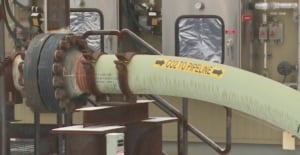
Shell will continue to operate its carbon capture and storage facility in Alberta. (CBC) Shell is not turning away from Canada completely, as the company remains the operator of the Scottford Refinery and carbon capture and storage plant. It also has a 10 per cent stake in its original oilsands mines. Canadian Natural shares upThe buyer of Shell's assets, Canadian Natural Resources chairman Murray Edwards was also on the stage the day Alberta's climate plan was announced. Edwards is one of the wealthiest men in Canada and is known for being a canny businessman.The market seemed to agree with him on Thursday. His company's shares were higher by more than four per cent on a day when the price of crude slipped below $50 US a barrel. "Mr. Edwards has been looking very clearly at where does the acquisition happen? He's been looking around the world, he's invested in a number of areas," said Stringham. "He saw this as an opportune time, I believe, at the bottom of the market, to be able to purchase an asset that's right in their wheelhouse." 
Canadian Natural Resources, is doubling down on its oilsands assets with its purchase of Shell's stake. Chair Murray Edwards was also involved in the carbon tax and oilsands emissions cap introduced by Alberta. (Jeff McIntosh/Canadian Press) Canadian Natural Resources owns the expanding Horizon oilsands mine and this purchase at $8.5 billion does indicate a clear faith in the oilsands continuing to generate returns for the company. However, there are also questions about whether the oilsands are becoming a strictly regional play. "It's a global asset, it's world scale, we have companies that are investing billions of dollars, they are Canadian, American, there's European investment," said Tim McMillan, the chief executive of the Canadian Association of Petroleum Producers. "I think that it's consistent with a couple of the other decisions we've seen coming out of the oilsands, that Canadian companies are making larger investments, and some that are international are taking a different view." |